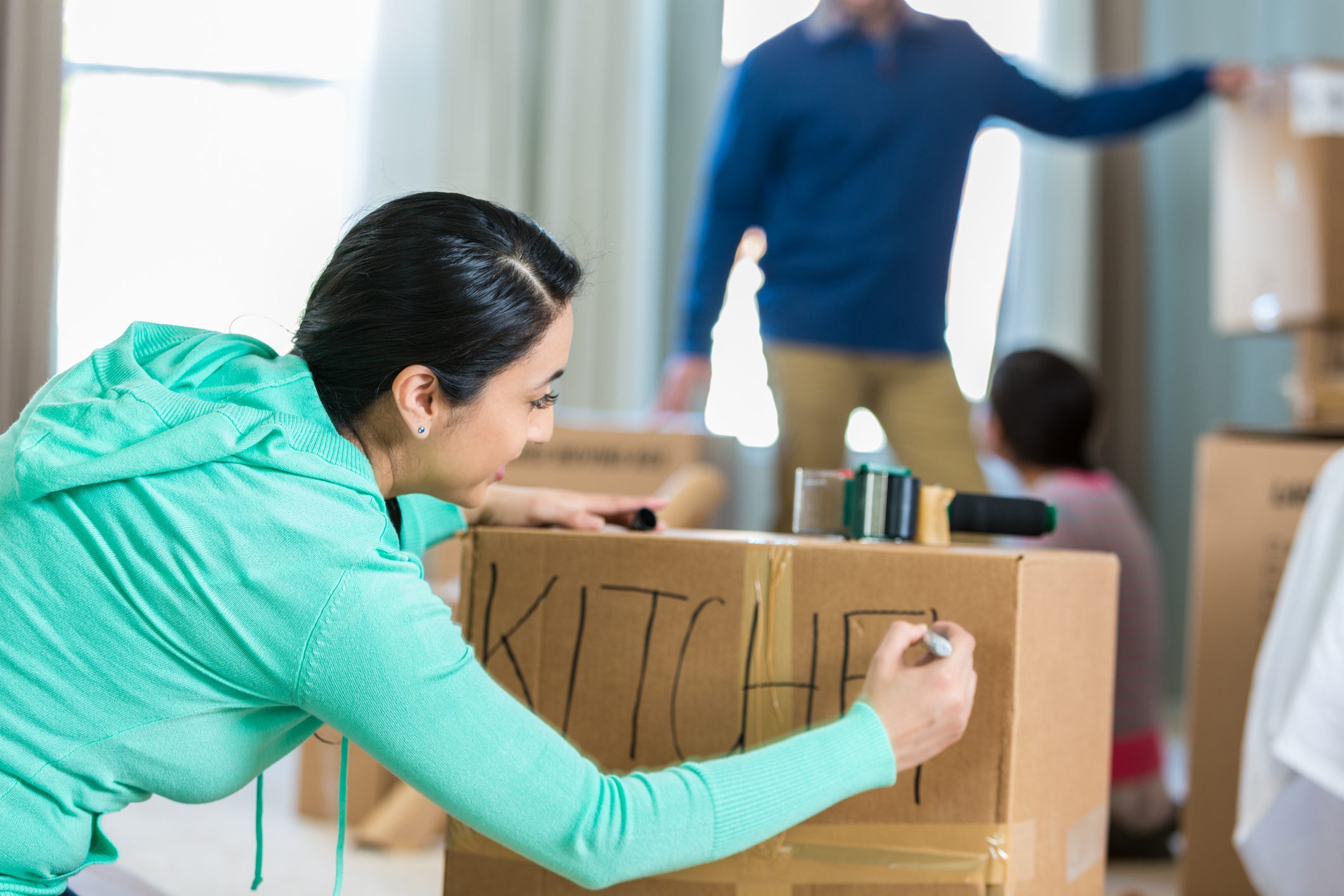
Packing for a move is one of the most stressful parts of the whole process. Yet it’s worth slowing down on this task because it pays off when you unpack at the new place. Labeling your boxes lets you find what you need at a glance, and it tells the movers which room each box belongs in.
Here are the pro tips on the best way to label moving boxes, including how to seal them properly so the labels stay put.
Why You Need to Label Boxes for Moving
Plenty of people skip labeling and regret it by the time they’re hunting for a coffee maker at 11 p.m. on moving day. Clear labels do four things:
- Tell you at a glance what’s inside, so you don’t rummage through ten boxes to find a charger.
- Keep cardboard boxes from blurring together. They all look the same once stacked.
- Direct movers to the right room without you standing in the doorway pointing for two hours.
- Protect breakables. A box marked FRAGILE, THIS SIDE UP, or HANDLE WITH CARE gets handled differently than a box of paperbacks.
A good label saves between 30 seconds and 5 minutes of decision-making per box. Multiply that by 80 boxes and the math is obvious.
Get the Timing Right: Pack, Seal, Then Label
When you label your boxes matters as much as how. Follow this sequence:
- Pack the box completely.
- Seal the top with packing tape (see the H-tape method below).
- Label the sealed box right away, while you still remember what’s inside.
Two rules to follow:
- Don’t pre-label empty boxes. It feels efficient, but plans change. You’ll grab that “Kitchen” box for spare bedding and forget to update the label.
- Don’t label hours later. After eight hours of packing, you will not remember what’s in box #34. Label as you seal.
What You’ll Need
- Thick permanent markers in black plus two or three colors. Waterproof matters because Michigan weather rarely cooperates.
- Adhesive labels in a few sizes if you prefer them over writing directly on cardboard.
- Colored packing tape (red, blue, yellow, green) for color-coded rooms.
- A roll of clear packing tape (2 inches wide, hot-melt or acrylic adhesive).
- A tape gun or dispenser. Far faster than tearing strips by hand.
- Skip masking tape, painter’s tape, duct tape, and office Scotch tape. None of them hold a box closed under weight, and the labels written on them peel off.
Color-Code Boxes by Room
Assign each room a color and apply it consistently. For example:
- Red for the master bedroom
- Yellow for the first-floor bathroom
- Blue for the kitchen
- Green for the living room
- Orange for the second-floor office
If you have multiple bedrooms, get specific. “Blue tape, 1st bedroom on the right” is clearer than “blue, bedroom.”
Tell everyone the code. Print a one-page key, hand it to your moving crew, and tape a matching colored sheet on each door at the new house. The movers will not stop to ask. They will follow the colors.
Or Number Boxes With a Master Inventory
If color-coding feels like too many markers, use numbers instead. Give each box a number, then keep a master list (paper, spreadsheet, or a moving app) that records:
- Box number
- Room destination
- Quick contents description
- Priority level (A, B, C or 1, 2, 3)
Example: “Box 27 — Kitchen — small appliances, coffee maker, toaster — Priority A.”
Keep a backup copy of the list in your phone, in your car, and on the cloud. A lost master list undoes the whole system.
Be Specific About What’s Inside
This is the single biggest upgrade most people miss. “Kitchen” tells the movers where to put the box. It tells you nothing when you’re looking for the can opener.
Better:
- Kitchen — Pots and pans
- Kitchen — Everyday dishes
- Kitchen — Small appliances
- Master bedroom — Winter clothes, top dresser drawer
- Garage — Hand tools and extension cords
Add room first, contents second. That order helps movers find the room before you need to find the contents.
For boxes with mixed items, tape a quick contents list to the outside.
Label All Sides, Not Just the Top
Boxes get stacked. The top label vanishes the second another box lands on it. Label at least two sides plus the top, and write big enough to read from across a room.
Place the label on a flat, taped area when you can. Adhesive sticks better there than on a corrugated edge.
If you reuse old boxes (a smart move for budget), tape over or cross out the previous markings before you write new ones. Old labels and arrows confuse movers and lead to boxes ending up in the wrong room.
Use Symbols and Abbreviations
A few symbols read faster than a word:
- ↑↑ — This side up
- ★ or ! — Fragile or high priority
- # — Box number (e.g., #1, #20)
- OF — Open first
- FRAG — Fragile
Pick the abbreviations you’ll actually use. Skip ones that overlap. “Ba” reads as both bathroom and basement, and that confusion sends boxes to the wrong floor. Use “Bath” and “Bsmt” instead.
How to Seal a Moving Box (the H-Tape Method)
Labels only matter if the box stays closed. The pros use the H-tape method, named for the H-shape the tape makes when it’s done.
For both the bottom and the top:
- Fold the smaller flaps in first, then the larger flaps over them.
- Run one strip of packing tape down the center seam where the two larger flaps meet. Extend it 2 to 3 inches down each side.
- Run two more strips along the edges where the flaps meet the box, parallel to the center strip.
- Press each strip down firmly with the heel of your hand to remove air gaps.
That’s the H. Three strips, top and bottom.
For boxes over 30 pounds (books, dishware, tools): double up the bottom strips and add an extra cross-piece. Heavy boxes blow out from the bottom, never the top.
Plan on 2 to 3 rolls of tape per room of your home. A two-bedroom move usually needs 8 to 10 rolls.
Pack and Label an “Open First” Box
This is the box you’ll thank yourself for. Every professional mover recommends one, and most homeowners forget.
The Open First box (also called the first-night box or essentials box) holds what you need on day one before you’ve unpacked anything else:
- Toilet paper, paper towels, hand soap, toothbrushes, toothpaste, shower curtain
- Phone chargers, a power strip, basic tools (screwdriver, hammer, scissors, box cutter)
- Bedding, pajamas, one change of clothes per person
- Snacks, water bottles, paper plates, plastic utensils, a kettle or coffee maker
- Medications, contact lens supplies, a first-aid kit
- Pet food and bowls if you have pets
- Important documents (lease, IDs, vet records) in a clearly marked folder
Three rules for the Open First box:
- Pack it last, unload it first.
- Label every side in bold letters: “OPEN FIRST.”
- Keep it in your car, not the moving truck. Nothing is worse than having the truck arrive an hour after you do and watching your toothbrush ride away again.
For multi-floor homes, pack one Open First box per level.
Mistakes to Avoid
A few labeling mistakes show up on almost every move. Skip them:
- Writing only on the top of the box. Stacked boxes hide the top label.
- Using a thin marker or ballpoint pen. It fades and smudges in transit.
- Skipping the master inventory when using a number system. Without the list, the numbers mean nothing.
- Forgetting to mark fragile boxes on every side. A fragile mark on one side gets missed.
- Overpacking heavy items into large boxes. No amount of tape saves a 70-pound box of books from blowing out. Use small book boxes for dense items.
- Writing too small. Movers should read your label from across the room, not up close.
- Not warning your crew about the system. The best color-code in the world is useless if the movers don’t have the key.
When to Skip the DIY and Hire Pros
Labeling and packing a full home takes most families 30 to 60 hours. If you’re moving on a tight timeline, juggling work, or relocating across Michigan, the math often favors pros. The team at Big Lake Movers handles packing services in Michigan for residential moves, apartments, and long-distance relocations. We bring the supplies, label every box clearly, and follow your color-code if you’ve already started one.
Frequently Asked Questions
What’s the best way to label moving boxes?
Write the destination room and a short description of the contents on at least two sides plus the top of the box. Use a permanent waterproof marker. Add the room first, then the contents (example: “Kitchen — Coffee maker, toaster, blender”). Add color-coded tape or numbers if you want a faster visual system.
How do I properly seal and label a cardboard box for moving?
Use the H-tape method. Fold the small flaps in first, then the large ones. Run one strip of packing tape down the center seam, then two strips along the edges where the flaps meet the box, forming an H. Repeat on the bottom. Then label the sealed box on at least two sides and the top with the room and contents.
What should I label as Fragile?
Dishes, glassware, lamps, electronics, picture frames, mirrors, vases, ceramics, and any item you can’t easily replace. Mark “FRAGILE” plus an arrow showing which side faces up. Mark every side, not just one.
What’s an Open First box?
It’s the box that holds everything you need for the first 24 hours in your new home: toiletries, bedding, chargers, basic tools, snacks, medications, and pet supplies. Label it “OPEN FIRST” on every side and keep it in your car instead of the moving truck.
What kind of tape should I use on moving boxes?
Hot-melt or acrylic packing tape, 2 inches wide. Skip masking tape, duct tape, painter’s tape, and office Scotch tape. They don’t hold up under weight and the adhesive fails in temperature changes.
Contact Big Lake Movers
If labeling and packing your own moving boxes is too time-consuming, let our crew show up with the supplies and do it for you. Big Lake Movers serves Grand Rapids, Holland, Kalamazoo, and the rest of West Michigan with professional packing and full-service moving.
Call us today or request a free quote and tell us what stage of packing you’re at. We’ll plan around it.